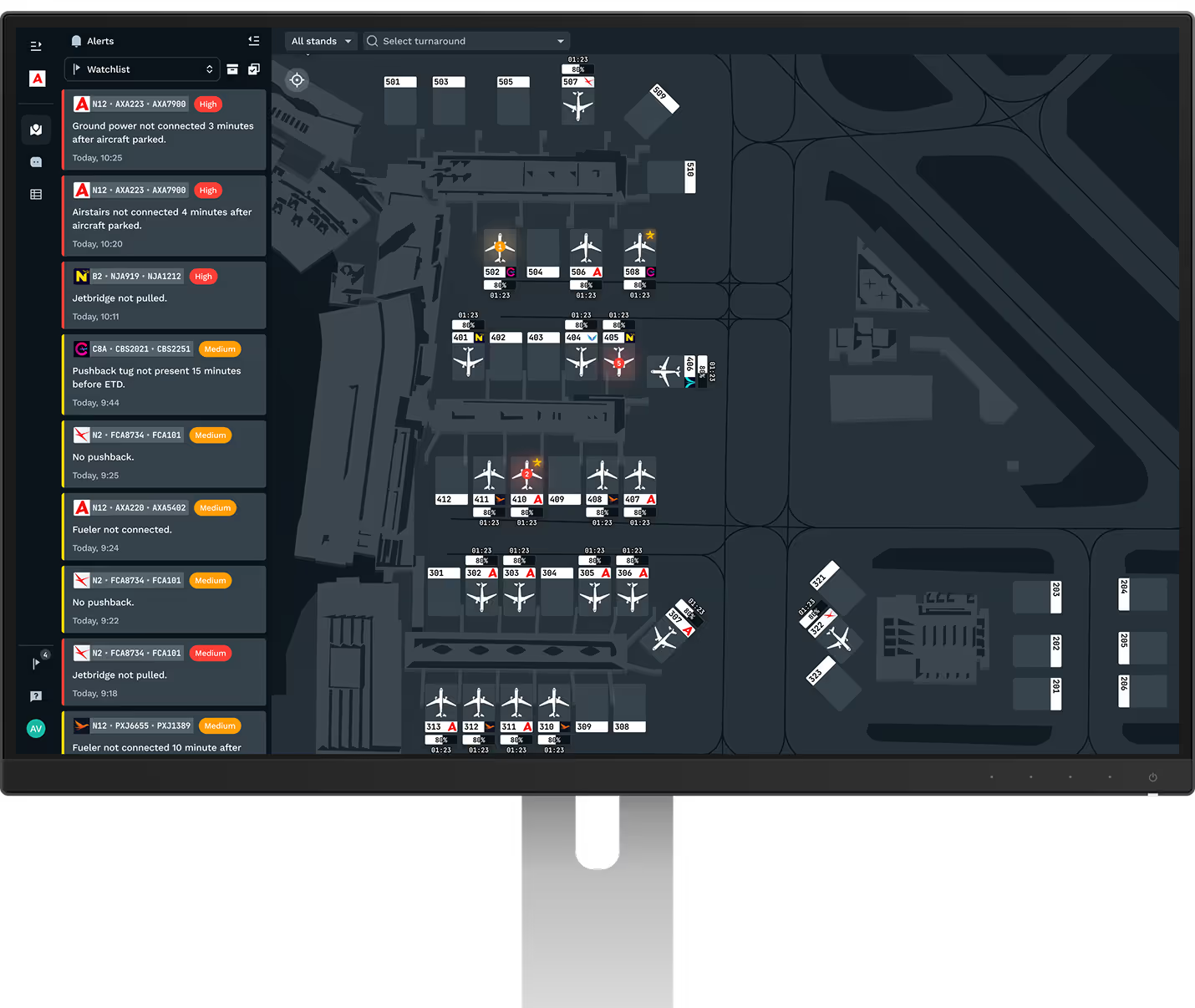
Most travellers experience airports as controlled chaos, tugs darting between aircraft, fuel trucks weaving past catering vans, ground staff sprinting with cones and chocks while tower controllers juggle dozens of moving aircraft at once. If anything goes slightly wrong in that dance, a late inbound, a blocked taxi lane, a misplaced ground vehicle, the delay ripples through the schedule for hours.
Fiumicino quietly deployed ApronAI across its stands and taxiways to answer a simple, brutal question that every airport CFO asks, how do we shave minutes off ground operations without spending billions on new concrete?_ The answer, in Rome’s case, came from software, cameras and algorithms rather than more tarmac.
The results are blunt enough for even the most sceptical operations director-6% fewer delays and a 4% improvement in gate turnaround performance, with no new runway, no extra pier, and no miracle in the Italian air. Just better information, earlier.
Most passengers think delays happen “in the sky” air traffic congestion, weather, holding patterns. Operational data says otherwise. A huge share of delays is born on the apron the area where aircraft park, refuel, board, and push back.
On a typical morning wave at Fiumicino, over 100 gates and stands are active. Each aircraft movement triggers a flurry of activity. A tug has to position for pushback. Fuel, catering and cleaning trucks need access at specific times. Buses or jet bridges must be available. Safety zones around engines and wings must be respected. Taxi routes to and from the runway need to be free of conflicts.
Traditionally, this is managed by a combination of human experience, radio calls, CCTV screens, and static procedures. It works until it doesn’t. One truck arriving late, one stand occupied longer than planned, or one mis‑timed pushback can trap aircraft behind each other, causing a domino effect of delays.
ApronAI ingests a live feed of what is happening at each gate and on connecting taxiways. Aircraft positions, scheduled times, actual timestamps, ground vehicle locations, and even weather and runway configuration. Think of it as an always‑awake operations officer who can see the entire airside in one mental picture, but with the ability to replay and simulate futures in seconds.
The system then predicts conflicts before they happen. If two aircraft are scheduled to push back through the same taxi lane at nearly the same time, or if a fuel truck’s route will cross an active push path at a critical moment, ApronAI flags the risk early. Suggests reroutes and resequences. Instead of reacting to a blockage after an aircraft has already stopped, the system can recommend an alternate taxi route, a small pushback delay, or a different stand assignment before the conflict materialises. Monitors turnaround milestones. It tracks when doors open, when ground power connects, when fuelling starts and ends, when boarding begins, and when the aircraft is ready. Deviations from the “ideal” profile trigger alerts so supervisors can intervene sooner.
None of this looks dramatic from the terminal window. There are no new shiny robots or self‑driving tugs. What changes is the timing the handful of minutes that separate an on‑time departure from a rolling delay.
Numbers like “6% fewer delays” and “4% better gate turnaround” can sound underwhelming at first glance. For an airport like Fiumicino, they are anything but.
Consider three layers of impact. One, Passenger experience. If even a fraction of departures leave a few minutes earlier, misconnects drop, missed onward trains become rarer, and passengers simply spend less time sitting on aircraft doors‑closed waiting for a pushback clearance. Two, Operational resilience. When the morning wave runs slightly tighter, the airport enters the afternoon with more slack left in the system. That means it can absorb an unexpected weather event or an ATC restriction with less disruption. Three, Financial ROI. Industry benchmarks often peg the cost of a gate delay at around €100 per minute once you factor in crew time, fuel burn from APU use, lost slots and passenger knock‑on costs. If an algorithm consistently removes even a couple of minutes of delay across hundreds of movements per day, the savings run into millions of euros annually.
That is the crux of the story, software, not cement, delivering measurable ROI on delay reduction.