By the time you reach the security line the airport already knows a surprising amount about you.
Your boarding pass is a QR code on a phone. Your passport lives as a digital token in a government database. A camera above the lane quietly checks that the face in front of it matches the one in the system. Somewhere in a back room another screen shows blips where drones have been detected and classified around the perimeter fence. In a maintenance control centre hundreds of kilometres away an engineer is watching a dashboard of engine vibration data and making a call on whether an aircraft due in later today can keep flying or needs a part swapped overnight.
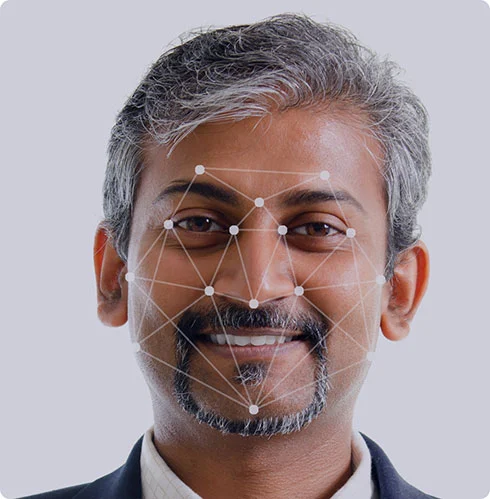
Aircraft still moves the people. But the decisions about who goes where and when are increasingly made by data. At the front end that story is written on your face. Over the past few years major airports and airlines have rolled out biometric touchpoints that turn passengers into moving data points. Enrol once at check in or even at home and cameras handle the rest. Gates open because a system has matched a live image to a stored template and tied it to a booking and to a security clearance. The industry’s global associations have been pushing hard in this direction arguing that digital identity is the only way to keep queues manageable as traffic grows. Passengers have voted with their phones. Most now say they prefer using mobile and biometric options for boarding and border controls when they are offered.
The same quiet shift is happening on the edges of the airfield where anti-drone systems now sit alongside radar and radio. A decade ago a stray quadcopter near an airport meant shutting the runway and waiting for it to go away. Today specialised sensors listen watch and sniff for uncrewed aircraft. Radar paints a tiny target. A radio sensor picks up a control link. An optical system locks on. Software stitches the inputs together and flags a drone or a false alarm. If it is a genuine threat another layer of decision support advises the duty officer whether to warn pilots change runway directions or in extreme cases jam or intercept the intruder. None of this works without fast data links robust fusion algorithms and a clear picture of “normal” background activity.
Once you board the aircraft the unseen data stream gets denser still. Modern jets and even many turboprops are wired to record and transmit the behaviour of engines hydraulics avionics and environmental systems almost continuously. Airlines have quietly become operators of rolling sensor networks. Each takeoff generates another set of temperature and pressure curves. Each landing adds a few more data points to brake wear models. Predictive maintenance teams comb through this history trying to spot the signature of a fuel pump about to fail or a valve that is getting sticky. When it works well a flight that would have been cancelled for a surprise defect becomes a routine overnight repair planned days in advance.
Even the baggage carousel is part of this data constellation. Bags once disappeared into a black hole of conveyors and chutes. Now, many of them carry tiny RFID chips that are read at key points between check-in and arrival. Each scan is a digital breadcrumb. Airlines use those trails to prove compliance with tracing rules to reduce mishandling and to refine the choreography of loaders and belts. The same logic extends to warehouses where spare parts move with tags and scanners so the maintenance system knows exactly which component went into which aircraft at which time.
What ties all these pieces together is a change in how aviation sees itself. For most of its first century, this was an engineering business obsessed with hardware. Build better wings. Add more engines. Stretch the fuselage. In the second century, those things still matter but the competitive edge lies in something less tangible. It lies in how many processes can be turned into data flows how much of that data can be trusted and how quickly it can be turned into action without losing sight of safety or privacy.
Anti-drone nets around airports are really about real-time situational awareness. Biometric corridors are about turning identity into a secure reusable token instead of a fragile piece of paper. Predictive systems for maintenance scheduling air traffic and even catering are about replacing hunches with patterns mined from millions of past flights. Together they are pushing aviation toward a future where the aircraft is just one node in a much larger information network.
You still hear engines spool up and feel the bump of rotation as the wheels leave the runway. That part has not changed. What has changed is that behind every flight there is now a dense invisible lattice of data holding it up. Aviation is still an industry of wings and runways and crews. It is also, increasingly, an industry of sensors algorithms and digital identities quietly doing their work so that the metal can keep moving.