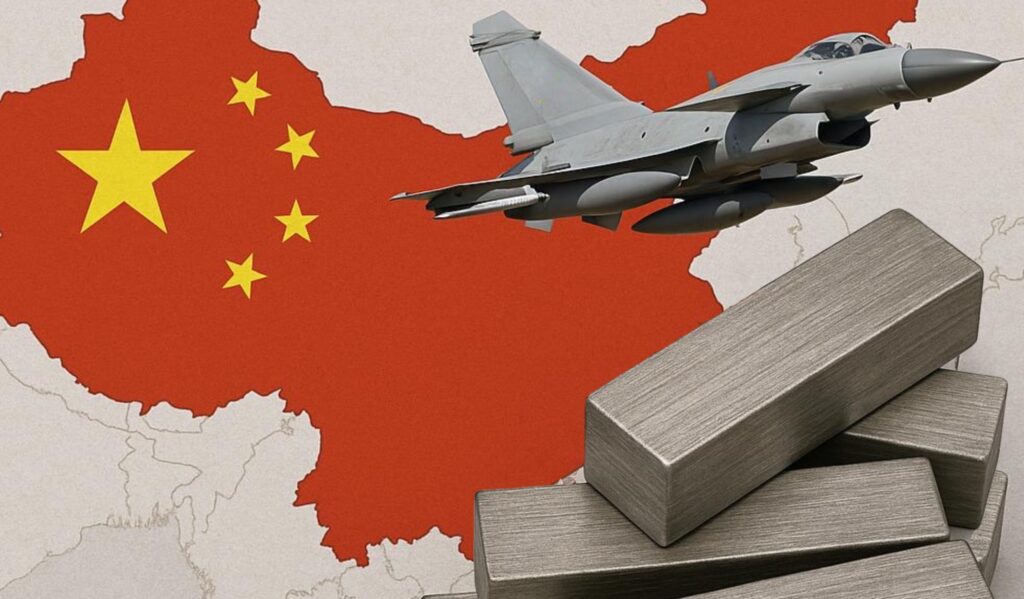
Close to two dozen Chinese firms showcased titanium and related aerospace products at Farnborough this week, according to Reuters. At least three unnamed suppliers said their titanium is already used on Airbus aircraft. Companies including HST Titanium, Jinda Titanium and Baoji YongshengTai displayed everything from titanium sponge and ingots to ceramic brake plates, seeking customers beyond a domestic market still dominated by COMAC.
The timing is not accidental. Global titanium supply has been strained by successive shocks like pandemic disruption, Western sanctions on Russian producer VSMPO-AVISMA after 2022, and U.S. tariffs on Chinese material. Domestic production in the United States has effectively ceased. Aerospace-grade titanium remains essential for engines, landing gear and airframes because of its strength-to-weight ratio and corrosion resistance. In that environment, Chinese suppliers are betting that tightness of supply will outweigh political caution.
Asia is usually covered as an aircraft buyer. The region that places the large orders that keep Boeing and Airbus production lines full. This story flips the lens. Chinese titanium producers are positioning themselves as strategic materials suppliers feeding Western aerospace programmes even as geopolitical tension rises. Airbus did not confirm the claims of Chinese content on its aircraft, yet the willingness of multiple suppliers to state the point on the record at Farnborough indicates that commercial relationships already exist below the level of public announcement.
The constraints remain real. Aerospace qualification for titanium is lengthy and politically sensitive. Western OEMs and engine makers have historically preferred Japanese, Kazakh or Saudi sponge for certified applications, and any expansion of Chinese content will face scrutiny from both regulators and governments. Tariff pressure continues. COMAC’s own growing demand could also pull Chinese material inward rather than outward.
Yet the commercial logic is straightforward. When a critical input is scarce and alternative sources are limited, price and availability begin to compete with origin politics. Chinese firms are using Farnborough to make that case directly to European and other Western buyers.
The Asian region is no longer only on the demand side of the commercial aircraft market. It is increasingly present on the supply side of the materials that make those aircraft possible and that presence is advancing under political strain that most coverage still treats as secondary to order tallies and certification headlines.
The titanium story at Farnborough is therefore not a footnote to the airshow. It is an early signal that the next phase of aerospace competition will be fought as much in the metals supply chain as on the final assembly line.