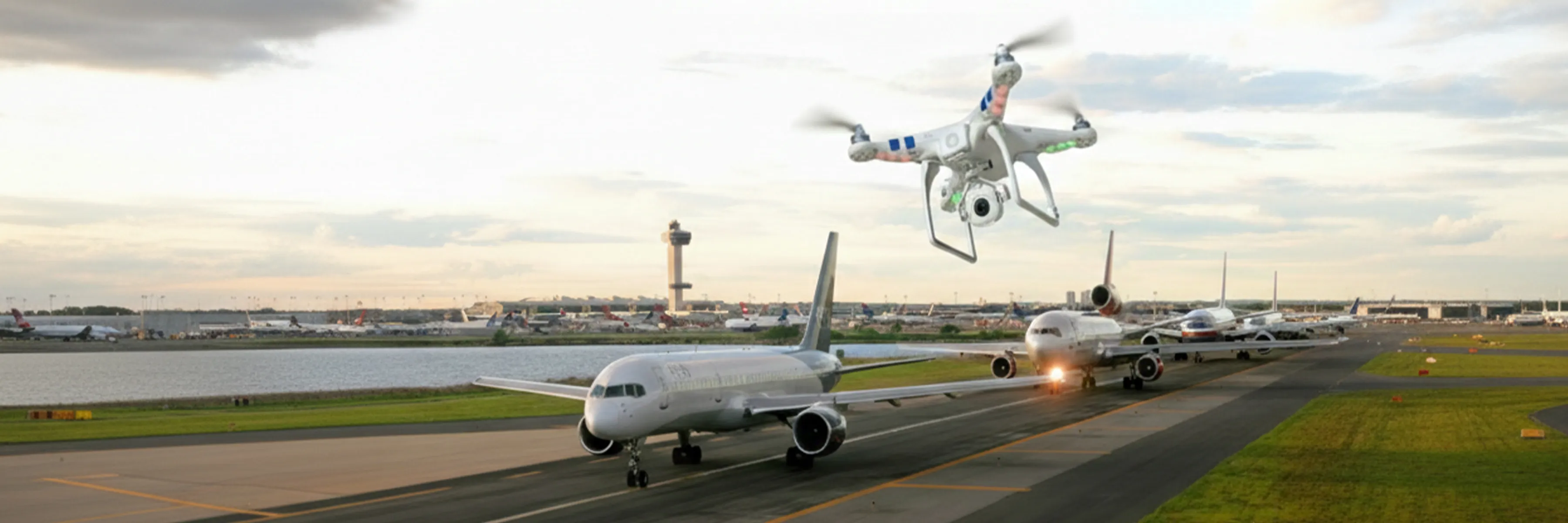
Unidentified drones have entered restricted airspace around RAAF Base Williamtown for a second time this month, after earlier incursions in July. The base hosts the bulk of Australia’s F-35A fleet and shares its operating environment with Newcastle Airport. NSW Police, the Australian Defence Force and partner agencies are working to identify the aircraft and their operators. Penalties already exist for flying in restricted airspace or creating a hazard to aircraft, yet detection has not been matched by public clarity on interception or neutralisation. The story is not only a military security breach. It is a dual-use airspace problem.
Williamtown and Newcastle Airport use the same airfield complex. Military training, fighter movements and civil departures share the sky and the ground environment. A drone that appears near the runway or over the base is therefore a risk to both defence operations and passenger flights. Who first detects the contact? Who has legal authority to jam, capture or destroy it while commercial aircraft are moving? How are civil departures protected when the response chain runs through police and defence rather than a single airport security centre? Those questions remain only partly answered.
Australia has already given defence personnel stronger powers to seize or disable drones near military facilities. Technology investment in detection and defeat systems is under way. The gap is operational. Many airports that are beside or share airspace with military bases still treat counter-drone capability as an optional upgrade rather than a standard layer of safety and security. Without continuous detection, clear command authority and practiced procedures that include civil air traffic control, a small unmanned aircraft can force the same choice seen elsewhere, stop movements and investigate, or hope the contact is harmless.
The Williamtown incidents show that restricted airspace on a map is not the same as controlled airspace in practice. For every base that shares a fence line or a runway with a civilian airport, drone defence has to be designed as a joint civil-military system. Otherwise the next unidentified contact will again test the same weak points, who sees it, who owns the response, and whether passenger aircraft keep flying while the answer is found.