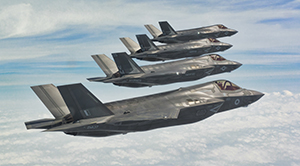
Six F-35As arriving at Jodhpur made for striking photographs. The larger story was what followed them with more than 200 US Air Force personnel, specialised equipment, security controls, spare parts, support vehicles and the procedures required to operate one of the world’s most tightly protected combat aircraft away from home.
A fighter deployment is never just a flight of fighters. With the F-35, it is a portable operating system. The public sees pilots climbing ladders and aircraft lifting into the desert sky. Air forces see the less visible work like technicians preparing aircraft, planners building sorties, logisticians tracking components, security teams controlling access and specialists safeguarding equipment and information that host-nation personnel may not be cleared to handle.
At Tarang Shakti, the F-35’s presence was a demonstration of expeditionary capability as much as airpower. The United States showed that it could take a highly advanced aircraft, with its own sustainment and security demands to an Indian base and integrate it into a multinational exercise without giving up control over sensitive systems.
That distinction matters. A visiting air force needs diplomatic clearances, overflight permissions, fuel arrangements, accommodation, cargo handling, ramp space, secure communications, medical support, firefighting cover and a plan for maintenance or recovery if an aircraft cannot depart on schedule. The six jets may have been the visible tip of the deployment. The personnel and equipment behind them made the deployment possible.
For the F-35, some of that support is unusually specialised. Low-observable aircraft require tightly managed maintenance practices. The aircraft’s coatings, panels and signature-management features cannot be treated like ordinary exterior repairs on a conventional fighter. Its mission systems, data environment, software and electronic-warfare capabilities are also among the most sensitive elements of the programme.
The host base can provide the runway, air-traffic coordination, fuel, emergency services, security perimeter and the physical space for operations. But the visiting force normally retains control over its aircraft, classified equipment, weapons-related systems and technical data. Partnership has boundaries. That is why more than 200 personnel matter.
They indicate that a modern stealth fighter does not travel alone. It brings a deployable ecosystem of maintenance teams, logistics staff, communications specialists, force-protection personnel, planners, commanders and support workers. Each role reduces the chance that one technical fault, missing item, access problem or security concern stops the aircraft from flying.
The comparison with India’s existing fleets is revealing. Tejas is India’s most sovereign option. Its operational support is tied to domestic institutions, Indian technicians and a national industrial base that India can expand over time. That does not remove supply-chain constraints, but it gives New Delhi more room to shape upgrades, maintenance and long-term availability.
The Rafale represents a different model: a highly capable foreign aircraft supported through a close French partnership, defined contracts and growing Indian maintenance arrangements. The Su-30MKI reflects India’s deep experience with Russian-origin aircraft and local assembly, but it also demonstrates the vulnerability created when spares, engines and upgrades remain linked to foreign supply chains.
The F-35 would add another layer, not just a new aircraft, but a distinct American software, sustainment and security ecosystem. It also clarifies the price of operating it.
Any Indian F-35 fleet would require more than acquisition funding. It would need secure facilities, specialised training, supply-chain assurances, maintenance infrastructure, cyber protection, trusted data systems and agreements defining who controls upgrades, mission data, repairs and weapons integration. India would need to decide what it could support independently, what it would support jointly, and what would remain under US control.
The aircraft at Jodhpur therefore offered India a practical demonstration. It showed the reach of American airpower. It showed how a stealth fleet can be deployed into a partner country. And it showed that the fighter’s true unit of operation is not one jet.
It is the people, equipment, information and trust required to make that jet fly.