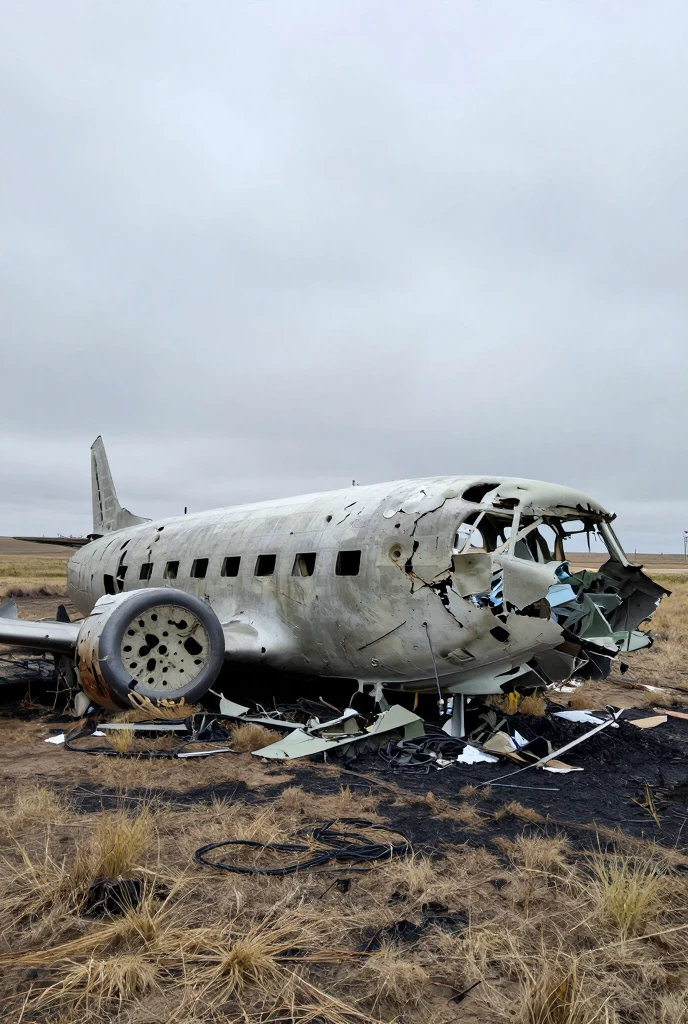
A Marine fighter jet in Washington state. A skydiving plane in Missouri. A B‑52 bomber in California. A business jet on a Texas highway. On television and social feeds, they blur into a single dread‑filled montage. It looks like a system coming apart. But if you trace each flight from takeoff to impact, and then zoom out over decades of accident data, a different story emerges. The cluster is loud. The pattern underneath it is quiet and very old.
June 13 Washington state, Marine F/A‑18 crash
A US Marine Corps F/A‑18 Hornet went down during a routine training mission over Yakima County. The pilot ejected and survived with minor injuries, but the wreckage started a wildfire on the mountain. A military safety board, not the NTSB, is leading the investigation.
June 14 Missouri, skydiving P‑750 disaster The next day, a Pacific Aerospace P‑750 used for skydiving crashed shortly after takeoff from Butler Memorial Airport. Witnesses saw it struggle to climb, then stall and fall all 12 people on board died, making it one of the deadliest skydiving aircraft accidents in US history. The NTSB is examining aircraft loading, performance, maintenance history, operator oversight and pilot factors.
June 15 – California, B‑52 Stratofortress loss On June 15, a B‑52 bomber crashed shortly after takeoff from Edwards Air Force Base during a test mission. All eight crew members were killed, the worst B‑52 accident in more than four decades. Again, this sits firmly in the military domain: a high‑risk flight profile, an aging but heavily modified aircraft, and an Air Force investigation.
June 16 – Texas, Citation jet on a highway
On June 16, a Cessna Citation Latitude flying from Mexico toward Texas attempted to divert and crashed onto a highway near Laredo. One passenger was killed, others were pulled from the wreckage by bystanders and police. The NTSB has opened a full investigation: radar data, ATC audio, maintenance logs and survivor interviews will feed into a final “probable cause” report.
Four days, four very different flights, at least 21 lives lost. Enough to make anyone ask: “What is going on?”
From a safety analyst’s perspective, the striking thing is not what these crashes share. It’s how little they have in common. All from different sectors military training, military test, recreational skydiving, private/business travel. Different airframes frontline fighter, turboprop utility aircraft, heavy bomber, modern business jet. Different rules and cultures Pentagon risk calculus on one end, a small skydiving operator on the other.
NTSB says as per newsreports 'there is no evidence so far of a single common cause or systemic defect tying these four together."
That 'happened to' matters. Aviation accidents are rare but not impossibly rare. When you model them statistically as independent, low‑probability events, you get an unintuitive result clustering in time is actually expected, even when the underlying risk is stable or falling.
Analyses of global accident records show that since the 1990s there have been many instances of three or more serious crashes within a few days or weeks including infamous runs like July 2014 (MH17, TransAsia, Air Algérie in eight days). One of significant events from 1996–2014 found 25 sequences of three or more accidents within ten days, including several four‑ and five‑event clusters. Clusters feel like 'this can’t be random' the math says 'this is exactly what random looks like over a long enough period.'
So the shock of 'four in four days' is real.
But there is a meaningful similarity here, it’s not a hidden defect. It’s the slice of aviation these flights belong to.
None of the four was a big US commercial airline service between major hubs. That’s where decades of NTSB work, FAA regulation and industry culture have driven the fatal accident rate to near‑zero.
Instead, all four sit at the margins of military training and test, skydiving operations Business and GA jets. Across decades, NTSB and academic reviews of accident reports show the same themes dominating these corners of the system, loss of control, maintenance inspection gaps, operational decisions and human factors like fatigue, distraction, experience level.
When multiple crashes cluster, the instinctive question is whetehr these planes crashing more often now?
The broad answer, built on NTSB data and independent analysis, is no for US aviation overall.
What’s new is not that four crashes could land in four consecutive days. That has analogues going back decades. What’s new is that in an era of near‑zero major‑airline accidents, every cluster lands in a hyper‑connected information ecosystem that amplifies dread.