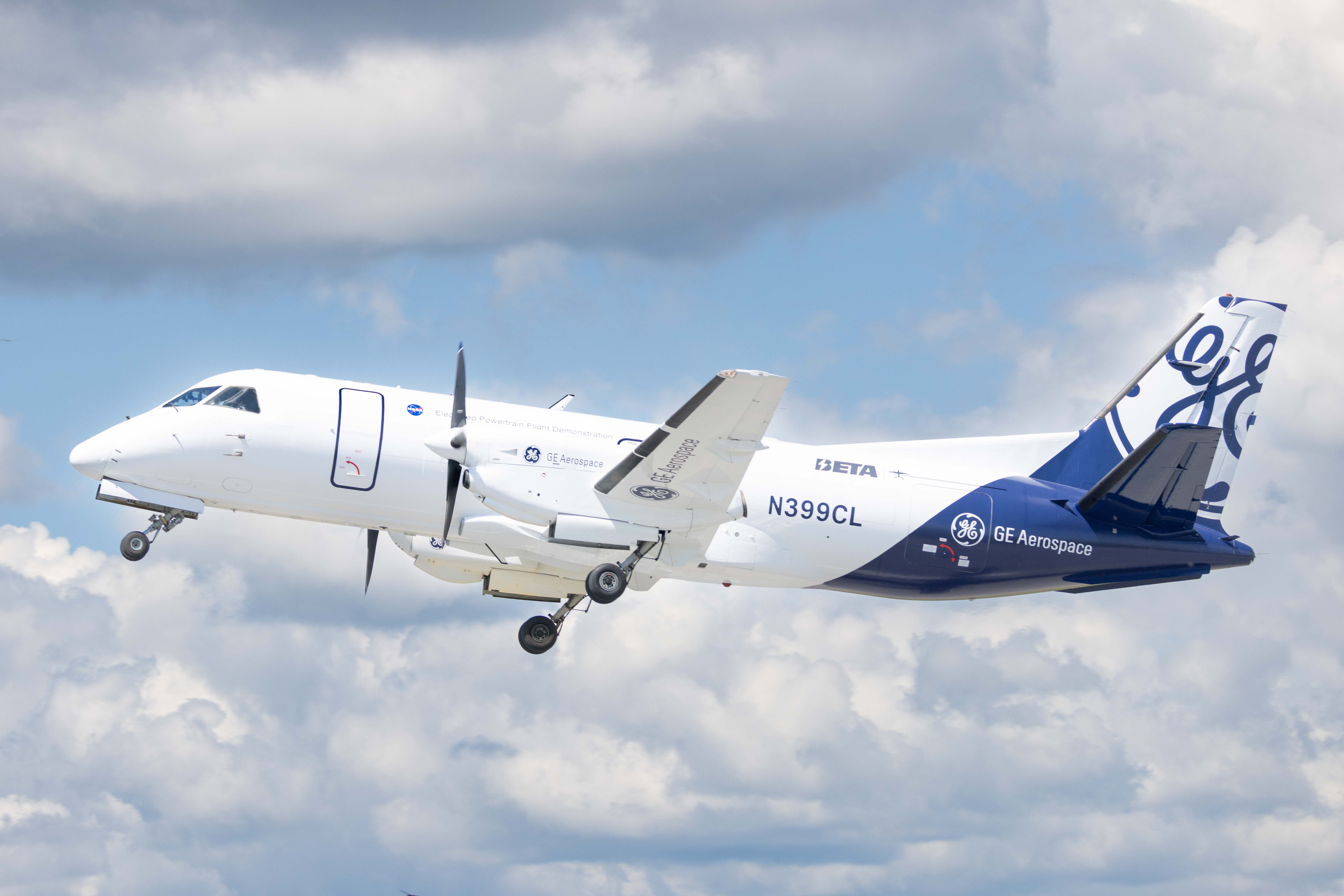
GE Aerospace announced on 20 July that it had completed the world’s first high-altitude flight assisted by hybrid-electric propulsion. A genuine technical milestone that moves the technology from ground and low-altitude demonstrations into the far more demanding regime of thin air, extreme cold and reduced cooling efficiency. This is not a concept aircraft or a low-speed test. It is a meaningful data point from the altitudes where commercial jet engines actually operate for long sectors.
The flight is part of a broader suite of technologies GE is developing for future propulsion systems, showcased at Farnborough alongside Rolls-Royce’s UltraFan programme and CFM’s Open Fan efforts. Together, these initiatives mark 2026 as the year hybrid-electric and advanced open-rotor concepts transitioned from PowerPoint slides to actual flight-test data.
Asian carriers operating large narrowbody fleets well into the 2040s like IndiGo, AirAsia, VietJet, Cebu Pacific and others, this is enticing. High-altitude hybrid-electric assistance, even if initially modest, opens a pathway to meaningful fuel-burn reductions on cruise segments that account for the majority of fuel consumption on medium and long-haul flights. Every percentage point shaved off specific fuel consumption compounds dramatically across thousands of daily sectors and millions of annual flight hours.
The technical challenge GE has begun to address is significant. At high altitude, the air is thinner, temperatures are much lower and traditional battery and electric motor cooling becomes harder. Demonstrating hybrid-electric contribution under those conditions provides early validation that the technology can deliver value where it is most needed. Not just during takeoff and climb where electric boost is easier to apply.
Combined with the parallel open-fan and UltraFan programmes, the industry is building a clearer picture of what propulsion could look like in the mid-to-late 2030s. Airlines are placing large narrowbody orders today (many with delivery windows stretching into that period), these test programmes are critical inputs into long-term fuel-burn and operating-cost assumptions. A successful high-altitude hybrid-electric milestone does not mean every A320neo or 737 MAX replacement will be hybrid by 2035, but it does suggest that meaningful efficiency gains beyond today’s LEAP and GTF engines are technically achievable within the planning horizon of current fleet decisions.
The timing is also notable. Carriers across Asia are grappling with fuel price volatility linked to Middle East instability and the long-term pressure of carbon pricing and CORSIA obligations. Any credible pathway to lower fuel burn even if it arrives in the 2030s strengthens the case for continued aggressive fleet renewal rather than life extension of older, less efficient aircraft.
GE’s flight does not rewrite tomorrow’s fuel economics. But it does provide the first real high-altitude engine suggesting that hybrid-electric propulsion can contribute meaningfully in the operating regime that matters most.