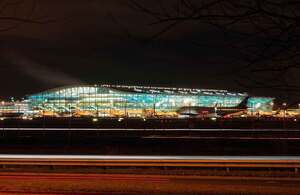
The UK Civil Aviation Authority has given Heathrow Airport Limited permission to recover up to £320 million of early third runway expansion costs through higher charges on airlines. The sum covers planning and design work incurred in 2025 and 2026 that is needed to prepare a credible Development Consent Order application. The figure is below the higher amount Heathrow had sought and comes with efficiency reviews independent scrutiny and reopener provisions if circumstances change.
A rival scheme known as Heathrow West will also recover approximately £4.14 million of costs it incurred up to November 2025 when the government named Heathrow Airport Limited as its preferred promoter. The regulator said both recoveries are consistent with its duty to promote competition in airport services where appropriate.
The immediate passenger impact is modest. The CAA estimates the decision will raise the maximum charge per passenger by around 15 pence in 2028 rising to roughly 30 pence in later years. Recovery is expected to stretch over 20 to 25 years. Airlines typically pass airport charges through to ticket prices so the cost will ultimately sit with travellers. Current charges already stand near the top of global rankings and carriers including British Airways have previously warned that early recovery risks making the full expansion unaffordable for consumers.
This decision covers only the early planning phase. A separate consultation will address costs from 2027 onward. The actual construction of a third runway is estimated by Heathrow at around £33 billion and any future recovery of those larger sums will be decided later. By allowing incremental recovery of planning expenditure, now the regulator has chosen a path that keeps the project moving without requiring the full capital outlay to be funded upfront by the airport or by government.
The approach illustrates a wider pattern. Large hub expansions face high political resistance long lead times and airlines operating on thin margins. Embedding early development costs into regulated airport charges spreads the burden across future passengers rather than concentrating it on today’s balance sheets. Similar mechanisms are likely to appear at other capacity constrained airports where private promoters must advance planning work years before any concrete is poured. For Heathrow the £320 million recovery is a first step that keeps the third runway process alive while transferring a measured portion of the early risk onto the airlines and ultimately the travelling public.