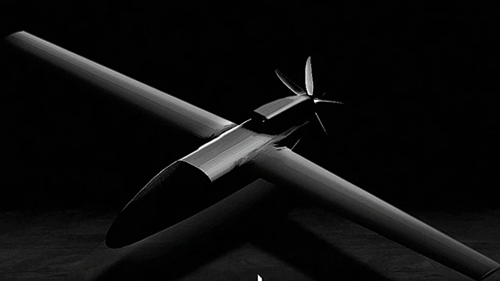
South Korea’s plan treats drones as a universal, citizen-scale combat skill rather than a specialist capability. In late June 2026, Defence Minister Ahn Gyu-back announced that the entire active-duty force of roughly 500000 personnel across the Army, Navy, Air Force, and Marines will be trained as drone warriors. The explicit goal is for every service member to operate drones the way they handle a personal firearm as a standard second personal weapon and universal combat tool not equipment reserved for dedicated units.
As per defence ministry, South Korea has 11000 domestically produced training drones in 2026 which capacity shall be scaled to roughly 60,000 training operational drones by 2029 (enough for about one per squad). At the same time, more than 20000 additional low-cost expendable systems (short-range reconnaissance drones and small loitering munitions) by around 2030. And, it will deploy accelerated fielding of the indigenous K-LUCAS long-range loitering munition (conceptually inspired by Shahed-style systems), AI-enabled swarms, and expanded counter-drone tools including lasers and high-power microwave systems.
All core components are to be 100% domestically produced avoiding Chinese parts to reduce supply-chain risk and grow a domestic industrial base. Procurement rules are being adjusted to speed adoption of commercial technology, and drone command structures are being reorganized so each service can develop mission-specific employment. The drivers are lessons from Ukraine and the Middle East plus the intensifying North Korean threat including North Korea’s own drone advances aided by Russia.
South Korea needs to compare its drone swarm defence capacity with Japan and Taiwan too. This creates a sharp, live contrast in Northeast Asia. For example, Japan is running a compressed, specialized interceptor procurement race. ATLA received proposals from 38 companies for systems to shoot down one-way attack UAVs (Shahed-type).
Taiwan is emphasizing mass attrition one-way attack drones for asymmetric denial. A proposed special budget of roughly NT$210 billion (about US$6.6–6.7 billion) for 2026–2031 covers approximately 208,200 coastal attack drones, 1446 reconnaissance drones, and 1320 unmanned surface vessels. The focus is high-volume, low-cost systems for coastal defence and anti-landing operations against a potential Chinese amphibious threat, with heavy emphasis on domestic production and 'non-red' supply chains. Political hurdles have slowed some funding, but production capacity and co-production with U.S. firms are expanding.
South Korea is betting that every soldier must be able to employ and implicitly counter drones at scale. Taiwan is building large inventories of expendable attack platforms for denial. All three are responding to the same lessons. Cheap attritable systems change cost-exchange ratios and force structure, choosing different emphases according to their primary threat and force structure.
Together South Korea, Japan and Taiwan form one of the clearest current regional laboratories for how democracies adapt to drone-centric warfare.