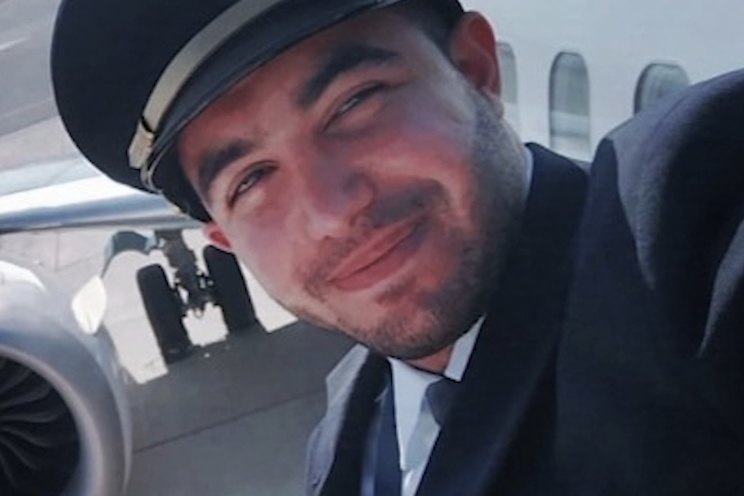
UAE inquiry widens beyond cockpit. The investigation into flydubai Flight FZ1073 has moved from the cockpit of a Dubai-to-Tel Aviv service into a broader, multinational inquiry. Whether any warning signs about the first officer existed before he joined the airline, and whether aviation and security systems were able to act on them.
The UAE Attorney-General has said the first officer attempted to carry out a terrorist act during the September 30 flight, attacking the captain in the flight deck with a crash axe and attempting to take control of the aircraft. The aircraft diverted and landed safely in Tabuk, Saudi Arabia. UAE authorities say the investigation remains under way, including analysis of physical and digital evidence, motive and possible links.
The official finding is grave, but incomplete. UAE investigators have not publicly released a court filing, a verified interrogation record, a final account of motive or evidence establishing whether the alleged act was directed by anyone else. The Attorney-General has said final results will be announced after the required investigative procedures are completed.
That distinction is central as the case draws claims from officials and media organisations in several countries. The incident is already a security story. It may also become a test of the information-sharing systems meant to stop an insider threat from reaching a commercial cockpit.
The alleged plan
Israeli media reported on October 5 citing two Israeli officials familiar with the UAE investigation, that the first officer told interrogators he had planned the alleged attack before flydubai hired him. A third source briefed on the inquiry said the alleged plan was to crash the aircraft into Ben Gurion Airport near Tel Aviv.
The UAE statement does say that investigators are examining whether the incident involved 'prior planning or direction'. Its later update said the first officer had begun executing a plan during the flight. It has not, however, publicly detailed when that plan allegedly began, the intended target, the person’s alleged ideology or whether investigators have identified any accomplice, facilitator or organisation.
That gap matters because public claims have travelled faster than public evidence. Israeli officials have described the event in terms of a thwarted attempt to crash the aircraft, while the UAE has described an attempted terrorist act and a continuing investigation. Both positions are serious; neither makes a final judicial finding.
The careful formulation is therefore not that the co-pilot 'admitted' wanting to kill the captain or crash the aircraft. It is citing Israeli officials, reported that he told UAE interrogators the alleged plan pre-dated his employment at flydubai. The UAE has not publicly released the underlying interrogation record.
The Oman question
The most consequential unresolved issue may be the reported aviation history in Oman.
Tailwind Times yesterday reported that the first officer had been barred from flying in Oman over concerns about extremist views, citing sources familiar with the matter. Other reports have similarly cited unnamed officials or people with knowledge of the inquiry.
If verified, the question is not simply why the person was able to obtain a cockpit job elsewhere. It is what kind of action was taken in Oman, on what basis, and whether that information entered a record that another employer or licensing authority could lawfully access.
A pilot can be restricted from flying for many reasons, a regulatory finding, a medical fitness issue, a failed operational check, an employer disciplinary decision, a security concern or the expiry of a licence or validation. Those categories carry very different legal implications. A company decision is not necessarily a regulator’s finding. A security concern may not be proven. A medical or employment record may be protected by confidentiality rules.
That is why the phrase 'barred from flying' needs documentary scrutiny. Was there a formal licence suspension? Was there a restriction imposed by an employer rather than a regulator? Was information recorded in a licensing system? Was flydubai notified? Did an employment-reference request identify concerns? And, if adverse information existed, did Omani law permit it to be disclosed internationally?
The answers cannot be inferred from the severity of the FZ1073 allegation. They require records, official replies and a clear chronology.
Australia’s limited but relevant link
Australian authorities have confirmed another strand of the inquiry. The Australian Federal Police said the Victorian Joint Counter Terrorism Team is investigating the co-pilot’s links to Australia. The unit brings together the AFP, Victoria Police and the Australian Security Intelligence Organisation.
Reporting says the individual studied in Melbourne, including at RMIT University. But an inquiry into 'links to Australia' is not a finding that planning, radicalisation, support or criminal activity occurred there. Australian authorities have not publicly alleged that a person or group in Australia helped the alleged plot.
That restraint is important. Cross-border investigations routinely examine a suspect’s education, travel, contact networks, finances, online activity and communications. Such inquiries establish a need to examine a connection, not responsibility for what followed.
The same principle should govern reporting on the person’s nationality, previous travel or religious and social contacts. These matters may be relevant to investigators. They are not evidence of guilt or organisational involvement without official proof.
A system designed for other threats
Commercial aviation has built formidable defences against external attack. Cockpit doors are reinforced. Airport access is controlled. Crew members receive security training. Passengers and baggage are screened. Airline operations centres monitor weather, routes and disruption.
An alleged threat from inside the cockpit is different. The individual has legitimate access to the flight deck, training in aircraft systems and the professional trust normally extended to licensed crew. The safety system must therefore depend on earlier layers like licence checks, medical certification, recruitment, employment references, recurrent training, behavioural reporting, security clearances and intervention by colleagues when a crisis unfolds.
The case raises difficult questions about the limits of each layer. An airline can verify a pilot’s licence, but it may not have access to confidential intelligence. A regulator can suspend a licence, but may not have the authority to share unproven security concerns across borders. A previous employer may be cautious about making allegations that cannot be substantiated. Privacy and due-process protections are not administrative inconveniences; they exist to prevent unfair blacklisting and discrimination.
But aviation also relies on a simple public expectation such as, if a pilot has been subject to a serious, properly founded restriction relevant to safety or security, the next employer should not be left unaware.
Questions for flydubai and regulators
For flydubai, the focus will be on procedures before and after hiring. What employment references were sought? Which licence and medical documents were verified? Did the airline receive an adverse report from a previous employer, regulator or security authority? If not, was relevant information outside the scope of normal checks, withheld by law or never recorded in a form that could be checked?
The case also raises broader questions for regulators. What must an airline learn before employing a pilot who has worked across several countries? What records move with a pilot when a licence is validated or converted? When can authorities share security information internationally? What is the threshold for a formal fitness-to-fly review? And do the current systems adequately address an insider risk while preserving due process for pilots who have not committed an offence?
None of these questions presumes that flydubai, Oman or any regulator failed. The UAE investigation may find that relevant information was unavailable, insufficiently substantiated, lawfully protected or never existed. It may find something else. The public record is not yet sufficient to decide.
The investigation’s real test
FZ1073 will be remembered first for the alleged attack and for the actions that enabled the aircraft to land safely. But the longer-term significance may lie elsewhere.
The central question is whether the alleged plot began long before the cockpit, and, if it did, whether any warning signs were visible to an authority, employer or security agency capable of acting on them.
The established facts in hand are limited. The UAE alleged an attempted terrorist act, a violent attack on the captain and an attempt to take control of the aircraft. The flight diverted safely and investigators in the UAE and Australia are pursuing related lines of inquiry. The alleged prior planning, a reported Omani restriction, the suspected motive and any wider network remain unproven in public.
The final test will not be whether every threat can be predicted. It will be whether aviation’s international vetting system can recognise and lawfully communicate a serious concern before a qualified pilot reaches the point where only a cockpit crew, passengers and an emergency diversion can stop it.