Delta has spent the last decade proving a simple thesis in hard numbers. Most of the profit sits in a minority of the seats. In 2026, that thesis is now the core of its business model.
Delta’s own disclosures and external analyses show that premium products now contribute well over a third of passenger revenue despite representing roughly a fifth to a quarter of seats. Before the pandemic about 24 percent of Delta’s revenue came from premium products. By 2023 that share had climbed to around 33 percent and by 2025 to roughly 35–38 percent depending on how you classify its cabins. More recent reporting indicates that by late 2025 premium cabins were contributing 43 percent of passenger income and that Delta was within striking distance of a point where premium ticket revenue would overtake main cabin revenue outright. In the fourth quarter of 2025, premium revenue actually exceeded main cabin revenue for the first time on a quarterly basis and in the first quarter of 2026 the two categories closed to within 41 million dollars of each other with premium growing 14 per cent year on year against just 1 per cent for main cabin.
That split translates into very different unit economics. Delta reports that its average seat now earns about 20 percent more revenue than a comparable seat at rival US legacy carriers thanks to a richer mix of premium fares, high Sky Club attachment, and dense loyalty credit card economics. Analysts estimate that premium seats generate three to four times the revenue per passenger of economy seats and can yield up to seven times more profit once you account for fixed costs. Internal Delta figures cited in investor commentary point to premium revenue per seat being around 3.7 times main cabin on comparable routes, a ratio that explains the airline’s resilience through fuel spikes and economic cycles.
The strategy behind this is straightforward and deliberate. Under Ed Bastian, Delta set out in the early 2010s to segment its cabin structure and sell premium as a product rather than as an upgrade. What it calls premium is a layered portfolio, Delta One business class on long-haul, domestic first class, Delta Premium Select as a true premium economy on international routes, and Comfort Plus as a branded extra-legroom product across the network. Each is sold and ticketed as its own fare bucket. The airline has steadily reduced the share of basic economy seats to under 5 per cent of its seating while increasing the proportion of premium seats toward 30 per cent and planning to go higher as new aircraft arrive. Future Boeing 737‑10s, for example, are slated to carry about 35 per cent premium seating.
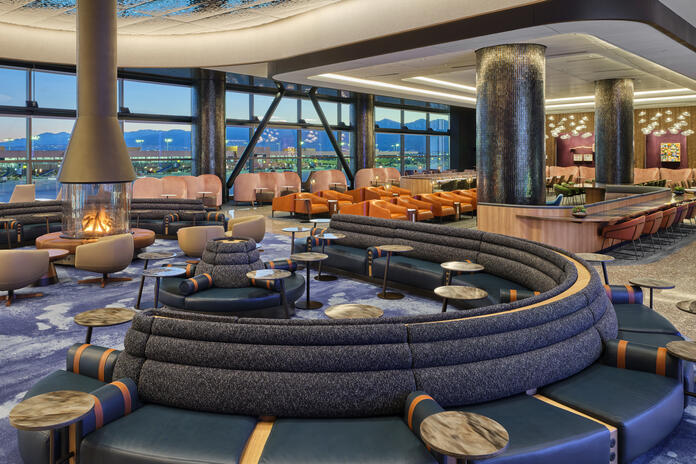
Delta’s investment pattern reinforces this premium tilt. It has poured capital into Sky Club lounge expansions and renovations across key hubs, adding capacity, improving food and design and tightening access rules to preserve exclusivity. It has upgraded long-haul cabins to fully flat Delta One suites with doors and introduced Premium Select cabins with wider seats and distinct service. On the ground it has extended its long-standing partnership with Porsche, running fleets of Cayennes and Panameras to offer tarmac transfers for top-tier Delta 360 and Diamond Medallion flyers at hubs like Atlanta, JFK and LAX. These rides are not bookable products in most cases but surprise transfers used to cement loyalty among the highest-value customers and to signal that Delta is playing in the same experiential league as leading global carriers.
The financial engine that ties this together is broader than the seats. Delta aims to derive more than 60 per cent of its revenue from premium seating and non-ticket sources by 2027 up from 53 percent pre pandemic. A major component of that is its co‑branded credit card partnership with American Express which contributes over 10 billion dollars a year in revenue value through fees and mileage economics. Cardholder spend converts into SkyMiles redemption which sustains demand for premium products and justifies their continued expansion.
This premium hegemony shows up clearly in Delta’s guidance. In January 2026 the airline projected about 20 percent earnings growth driven chiefly by affluent and business travellers even as economy demand looked soft. Nearly all planned seat growth will be in premium categories with minimal expansion in the main cabin. Main cabin ticket revenue actually fell 5–7 per cent year on year in recent quarters while premium grew 7–9 per cent. Delta expects free cash flow of 3 to 4 billion dollars in 2026 and is comfortable ordering additional 787s and other new aircraft because it believes the premium segment will stay robust even if more price-sensitive leisure traffic weakens.
The numbers now validate the bet. When an airline can say that roughly a third to two-fifths of its passenger revenue comes from a fifth of its seats and that those seats earn almost four times as much per unit as the rest of the cabin, and when that airline can couple that with heavy non-ticket income, it has built a structure that is naturally more resilient to shocks than one reliant on commoditised coach travel. Delta’s premium pivot is therefore not just about fancy lounges or Porsche rides on the tarmac. It is a carefully engineered financial model that uses differentiated products, loyalty economics and targeted ground indulgence to turn a narrow slice of its seating plan into the majority of its profit.