Every crash spawns investigators. They arrive before the smoke clears, often in the dead of night or pouring rain, stepping carefully around twisted metal and the lingering scent of jet fuel. While the world mourns, these professionals begin their meticulous work of photographing, mapping, securing evidence. They will spend months and years, in silence piecing together fragments of tragedy to prevent the next one. Their reports are dense with technical detail become the invisible scaffolding that holds modern aviation together. Few passengers ever know their names yet hundreds of thousands owe them their lives.
In India, this vital mission rests with the Aircraft Accident Investigation Bureau (AAIB). Since its formal establishment in 2012 through March 2024, the AAIB has investigated 99 accidents and 116 serious incidents. With India operating one of the world’s fastest-growing aviation markets with more than 800 commercial aircraft serving hundreds of millions of passengers annually, the burden on this small team is immense. Core investigators number around eight operating on a modest budget. By contrast, the US NTSB employs approximately 400-440 people with a budget exceeding $140 million. Australia’s ATSB has about 110 staff, while the UK AAIB operates with roughly 57-64.
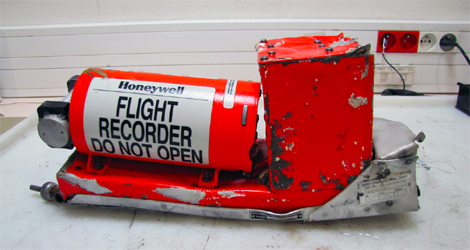
India’s AAIB investigators follow rigorous international standards under ICAO Annex 13 which says independent, fact-finding, non-punitive. The process begins the moment they reach the site. Priority goes to recovering the 'black boxes', flight data and cockpit voice recorders that survive crashes to tell the final story of speed, altitude, engine performance, and crew conversations. Wreckage is painstakingly documented and often reconstructed in hangars, turning scattered debris into a three-dimensional puzzle.
Teams analyse everything, weather data, maintenance logs, pilot training records, pilot's medical record, pilot's psychology, air traffic communications, and human factors. Simulators recreate the final moments. Interviews with survivors and witnesses reveal pressures that numbers alone cannot show. The result is a final report detailing probable causes and issuing safety recommendations that reshape procedures, training, aircraft design, and regulations worldwide.
The emotional and professional burden is profound. Investigators confront the raw aftermath of disaster-families seeking closure, public scrutiny, and the weight of knowing small oversights can cost lives. Major probes can stretch for years. In India, the 2020 Kozhikode Air India Express runway overrun on a wet tabletop runway highlighted unstabilised approaches, tailwind conditions, and runway safety margins. The AAIB’s report despite resource constraints noted in official documents highlighted systemic lessons that echo across the industry.
Globally these professionals have driven transformative change. The Air France 447 investigation into pitot tube icing and stall recovery revolutionised high-altitude training. The Boeing 737 MAX tragedies exposed flaws in design certification and pilot interfaces, leading to comprehensive reforms. And even now, Boeing 737 MAX certification has been postponed to end 2026 and potential entry into flying has been delayed to the next year. Each case, no matter how heartbreaking, contributes to aviation’s extraordinary safety record, fatal accidents now rarer than one per many millions of flights.
This has been possible by carefully studying the accidents and causes and then takinig preventive steps. Image if this would be done regarding our road accidents, the earth would be more safer. Road accidents are like a silent epidemic. Every year in India alone close to 5 lakh accidents occur and close to 2 lakh people die and many more are injured. Globally road accidents kill 1.19 million people every year. Unlike aviation, where bodies like India’s AAIB and the US NTSB conduct thorough, independent investigations into every significant incident then producing detailed reports and safety recommendations that have dramatically improved safety. Road crashes largely rely on police FIRs. A dedicated national road accident investigation body, similar in mandate to the NTSB for highways, could systematically study why incidents occur (human error, vehicle defects, road design flaws), recommend evidence-based improvements in infrastructure, vehicle standards, enforcement, and behaviour, and drive nationwide changes. Such an institution could save hundreds of thousands of lives by turning every tragedy into actionable lessons for safer roads and vehicles worldwide.
Coming back to aviation, what makes this one of the world’s most fascinating professions? It blends detective work, engineering, psychology, and diplomacy. Investigators travel to remote sites, collaborate across borders as accredited representatives, and solve complex puzzles under pressure. A misaligned component or overlooked training gap becomes the thread that unravels the mystery. The reward is profound, this anonymous service that saves countless lives. They in fact prevent the crashes the public never hears about.
Aspiring investigators typically build deep operational experience—as pilots, maintenance engineers, air traffic controllers, or safety managers. Formal paths include aerospace engineering degrees, specialised courses from institutions like Cranfield University or ICAO programmes, and certifications in accident investigation and human factors. In India opportunities arise through Ministry of Civil Aviation roles or domain expertise panels.
India’s aviation boom new airports, expanded fleets, rising connectivity, demands a matching commitment to safety infrastructure. Parliamentary panels and prior reports have flagged the need for more manpower, better facilities and funding to keep pace. Strengthening the AAIB is not merely bureaucratic, it is an investment in every passenger’s safe journey.
These guardians work in the shadows, arriving at humanity’s lowest moments to forge a safer future. They shoulder the weight of the past so that the skies remain open and secure.