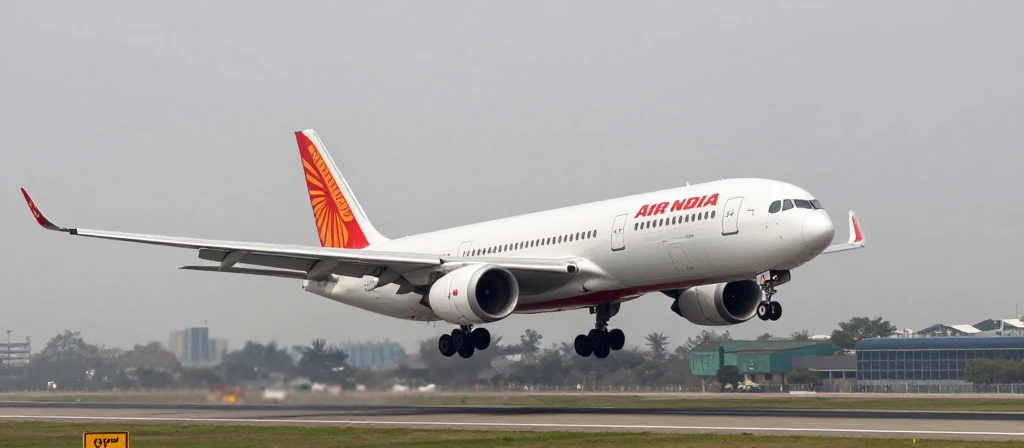
India’s aviation system isn’t moving at one speed anymore. It’s being pulled in three different directions at once. One, a premium layer that’s booming, Two a budget layer that’s under relentless pressure, and Three, a safety regime that’s finally starting to catch up and push back.
Speed 1: Premium growth on top of a mass market
On paper, India is now the world’s third‑largest domestic aviation market, driven by rising incomes, regional connectivity and a young, mobile population. The surface narrative is familiar, more airports, more aircraft orders, more passengers.
Look closer at the demand mix, and you see the first “speed.” Markets show that India’s aviation market worth about 14.8 billion dollars in 2025 is projected to reach over 26 billion by 2030. Low‑cost carriers (LCCs) dominate with roughly 70% of total capacity, around 18.3 million seats versus 7.7 million for full‑service carriers (FSCs) as of late 2025. Yet within that mass, there is a clear tilt towards better cabins and higher yields. But segment data divides demand into economy, premium economy, and business/first and there is a growing willingness among a slice of passengers to “pay extra” for better experience even on LCCs. On one hand, there is a huge population chasing affordable fares and on the other those chasing better customer experience and luxury by paying little extra, which means premium services. It means market is bifurcating. The premium layer is growing fastest in revenue terms. But it is riding on top of a base that remains brutally cost‑focused.
Speed 2: Budget pressure and fragile economics
Underneath the glamour, the second speed is much harsher a permanently stressed budget segment. Multiple policy and exam‑oriented reviews now talk of a growth paradox-soaring demand, but airline financials that remain fragile. Key stressors are well‑known like high structural costs, market concentration and thin yields
Policy analyses from late 2025 describe a sector marked by “operational overstretch, regulatory gaps, pilot shortages, and high market concentration,” where rapid expansion has outpaced financial and institutional capacity. But we also saw the fragility of system guiding IndiGo's scheduling crisis in 2025 too. Everyone is chasing volume. Very few are consistently making money on it and engine spininng at maximum RPM but without shock absorbers.
Speed 3: Safety scrutiny and regulatory whiplash
A fatal Air India accident in June 2025 triggered what one legal and policy analysis calls 'sector‑wide reviews' and 'intensified oversight by the Directorate General of Civil Aviation (DGCA) which tightened enforcement around continuing airworthiness, maintenance governance, and technical record‑keeping, including outsourced MRO. Revised Flight Duty Time Limitation rules were enforced from November 2025, leading to major disruptions when airlines struggled to adjust rosters and crew supply. The Aircraft (Investigation of Accidents and Incidents) Rules, 2025 strengthened the Aircraft Accident Investigation Bureau (AAIB), expanding reporting obligations and clarifying confidentiality and transparency provisions. The Bharatiya Vayuyan Adhiniyam, 2025 replaced the colonial‑era Aircraft Act, modernising the legal basis for licensing, operational approvals and safety oversight. A new law to implement the Cape Town Convention tightened creditor rights and clarified the DGCA’s role in aircraft registration and deregistration, with draft rules hinting at stricter repossession processes.
By early 2026, commentary across think‑tanks and exam‑prep platforms was using the phrases that India’s aviation sector faces a “reckoning” and “stands at an inflection point,” where growth must be balanced with “regulatory readiness, safety discipline and operational resilience rather than capacity ambition alone.”
But at the same time, the government has signalled “tighter oversight in 2026” for non‑scheduled operators and uncontrolled airfields, aiming to close gaps in charter and regional safety governance as private and regional flying expand.
In combination, these three speeds create a system that is simultaneously expanding at the top premium cabins, private jets, new widebody orders, global ambitions. Grinding in the middle with LCCs and hybrid carriers fighting for yield with thin margins and high systemic costs and tightening at the edges by regulators, courts and international bodies pushing for stronger safety culture, better governance, and more robust consumer protection.
So the central question is can a system built on cheap fares and headline growth absorbe the weight of global-hub aspirations and rising safety expectations? The risk is obvious.