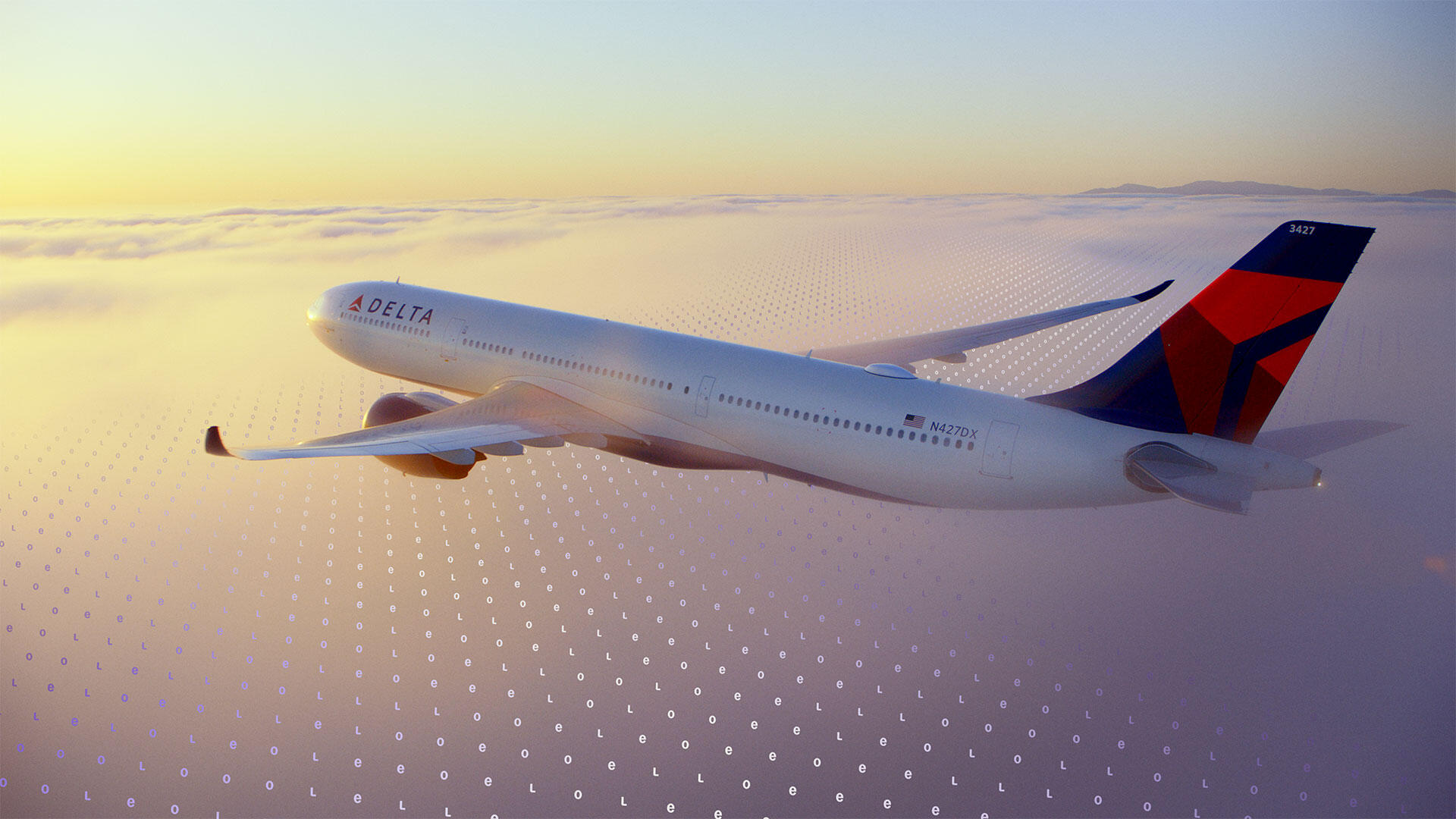
Delta Air Lines has signed a long-term agreement with Amazon Leo, formerly Project Kuiper, to install low-Earth-orbit satellite Wi-Fi on an initial 500 aircraft beginning in 2028. Recently, Amazon annouced that Amazon Leo plans to connect smartphones and other mobile devices directly from space like bringing voice, messaging, data, and emergency services to areas beyond the reach of cell towers. The company has filed an application with the Federal Communications Commission to launch and operate the Amazon Leo Direct-to-Device (D2D) System, a constellation of up to 5105 low Earth orbit satellites designed to deliver D2D connectivity to customers globally, with deployment beginning in 2028.
In Delta Air Lines the system is designed to deliver download speeds up to 1 Gbps, a substantial jump over the airline’s current connectivity. Free access will remain available to SkyMiles members, consistent with Delta’s existing policy.
The deal makes Delta the last of the four largest US carriers to commit to a LEO provider. United, Southwest and Alaska have already chosen Starlink. By selecting Amazon, Delta deepens an existing relationship that already includes extensive use of AWS cloud services across its operations. Early installations are expected to focus on new Boeing 737 MAX-10 aircraft scheduled to enter the fleet in 2027, with the broader 500-aircraft phase starting the following year.
Amazon Leo satellites orbit far closer to Earth than traditional geostationary systems, which reduces latency and supports higher capacity. Each aircraft will carry a single aviation-grade phased-array antenna capable of the stated speeds. The practical result, if the network performs as claimed, should be connectivity that feels closer to a ground-based broadband connection, enabling streaming, video calls and routine work without the usual in-flight constraints.
The competitive stakes are clear. Starlink already has a multi-year head start in airline installations and a much larger constellation. Amazon is still building out its network. Delta’s choice therefore represents a bet that Leo’s technology, combined with the existing AWS partnership, can deliver a superior passenger experience by the time the hardware is flying at scale. Whether that bet succeeds will be measured in actual in-flight performance once the first aircraft are equipped and the network has matured. Until then the announcement marks the moment the US Big Four fully entered the LEO connectivity era, each with its preferred satellite partner.