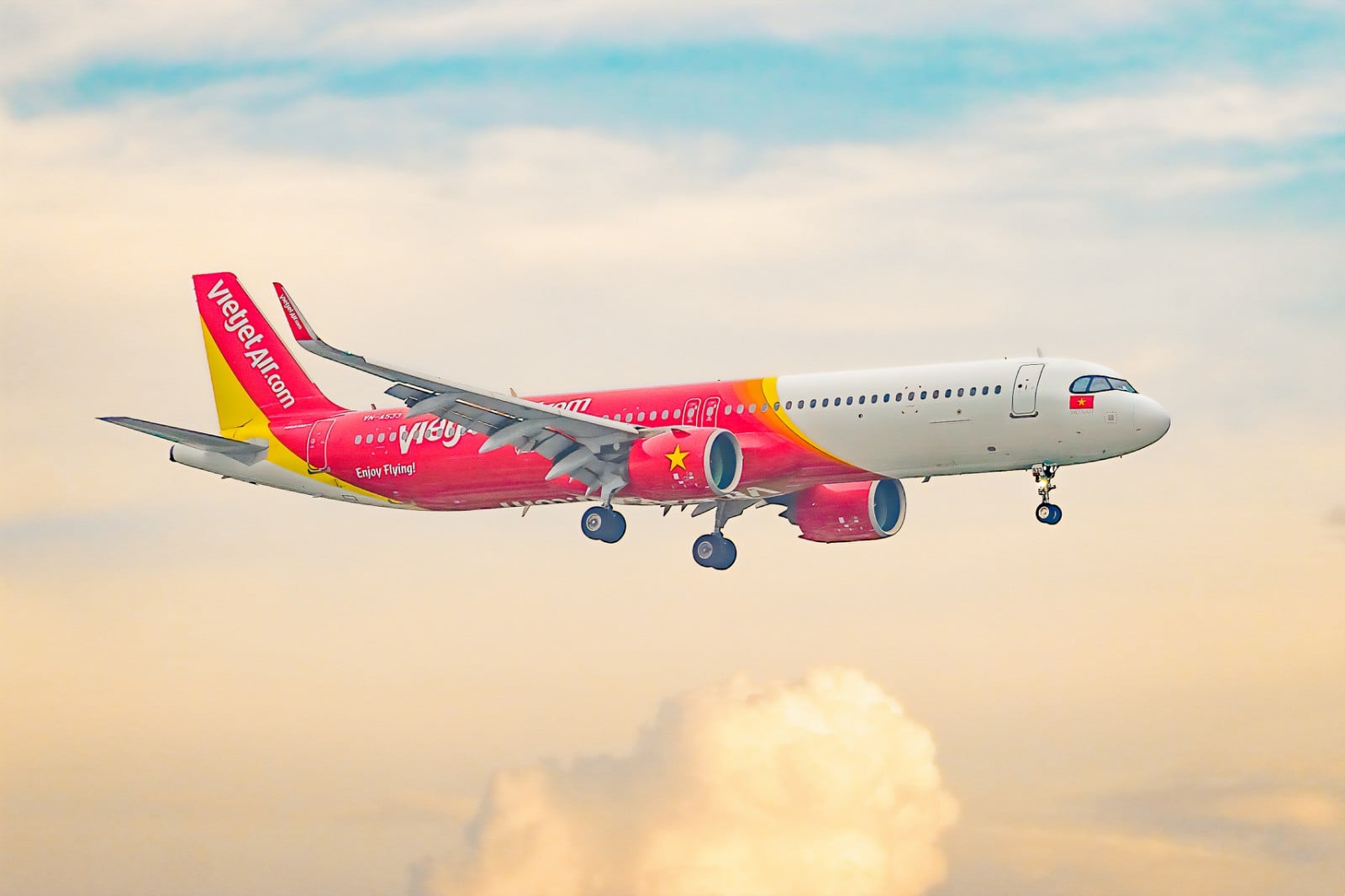
Vietjet has opened a three-times-weekly direct service between Ho Chi Minh City and Colombo, the first scheduled nonstop link between Vietnam and Sri Lanka. The airline positions the route around tourism, trade and cultural exchange. The larger signal is quieter and more structural: Southeast Asian low-cost carriers are beginning to draw their own lines across the Bay of Bengal instead of routing every connection through India’s busiest hubs.
Colombo is at a useful intersection. It offers beaches, heritage sites and tea-country tourism for Vietnamese and broader ASEAN travellers. It also is on labour, garment and light-manufacturing corridors that already tie Sri Lanka to East and Southeast Asia. Buddhist pilgrimage and cultural traffic add another steady, if seasonal, flow. For Vietnamese exporters and traders, a direct flight shortens the path to a South Asian market that previously required a stop in Kuala Lumpur, Singapore, Bangkok or an Indian gateway. For Sri Lankan travellers, Ho Chi Minh City becomes an entry point into Vietjet’s wider network across Vietnam, the rest of ASEAN and beyond.
The route also tests whether Colombo can function as a low-cost bridge rather than merely a destination. Gulf carriers and full-service Asian airlines have long dominated the high-yield traffic between the regions. A narrowbody, high-frequency, price-sensitive service operates on different economics. If it sustains load factors, it creates a template for other ASEAN–South Asia pairs that do not need to touch Delhi, Mumbai or Bengaluru. That matters for secondary cities and for passengers whose primary goal is a simple, affordable connection rather than a premium hub experience.
Competition will come from existing one-stop options and from any future moves by Indian, Sri Lankan or other Southeast Asian carriers. Fuel costs, aircraft availability and bilateral rights will decide how quickly the map fills in. For the moment the significance is the existence of the link itself. A Vietnamese low-cost airline has decided that Colombo is worth a direct aircraft. In a region where air networks still often run through a handful of mega-hubs, that decision is a small but clear expansion of the Indian Ocean’s low-cost geography.