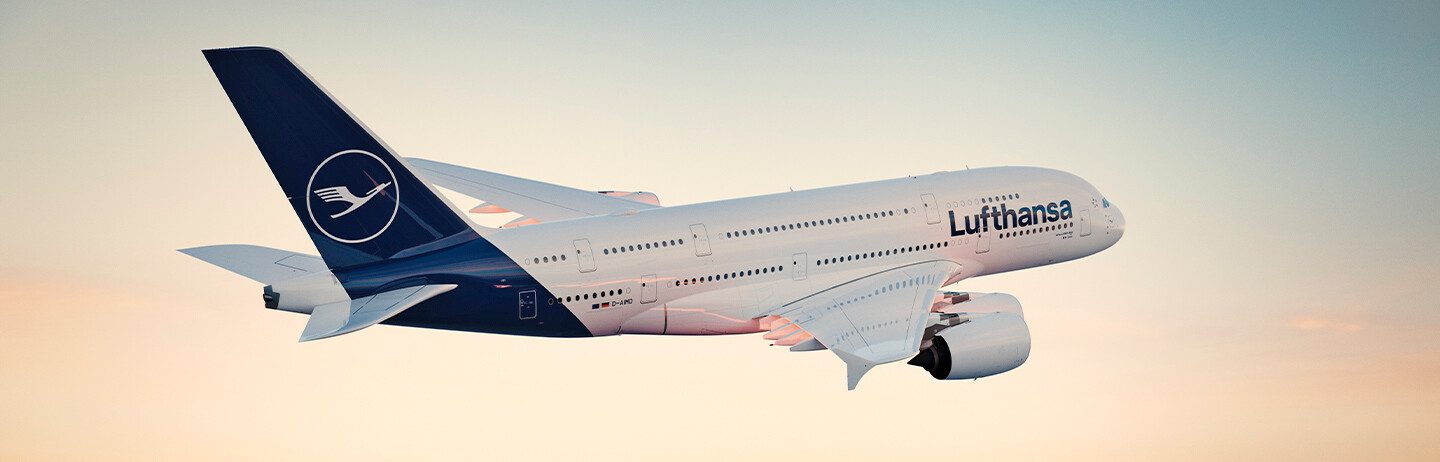
Airbus stopped building the A380 years ago but in June 2026 the aircraft is still very visible in the world’s skies. It continues to serve as a specialist giant on routes where airport slots are scarce and demand is concentrated in a way that smaller twins cannot fully satisfy. Ten airlines still schedule it on a regular basis and a handful of refurbished frames are being returned to service in a second life that very few people in the industry forecast when production ended. A380 is one aircraft that has moved from being written off to being seen as a niche asset that is too useful to discard.
In the early years the A380 was launched on the assumption that global aviation would be dominated by a network of megahubs forever. The logic was simple. Put as many people as possible into one aircraft and move them through a small number of enormous airports. For a while that seemed plausible. Then twin engine wide bodies matured. The 787 and A350 families gave airlines the freedom to open thinner routes with lower trip costs and flexible frequencies. Carriers discovered that passengers liked more departure options even if each flight was smaller. Some early A380 operators began to cut back. Singapore Airlines retired its oldest frames. Air France withdrew the type. Malaysia Airlines never really found a sustainable role for it.
By the time Airbus announced the end of production in 2019 the narrative among everyone thought that the A380 was a magnificent misfit. The pandemic appeared to confirm that verdict. When long haul demand collapsed the first aircraft parked in deserts and remote corners of major airports were the largest ones. Lufthansa sent several A380s back to Airbus. Korean and Asiana signalled that the type would exit their fleets in the medium term. It was easy then to imagine the superjumbo joining Concorde as an icon that arrived a little too early and a little too heavy for its commercial time.
What followed was not the grand comeback that marketing departments like to talk about but a very specific reprieve. Demand returned faster than fleets could be rebuilt. Slot-constrained airports such as Heathrow and Sydney were quickly back at or near capacity in their peaks. Supply chains made delivery of new generation twins slower than airlines had hoped. But A380 offered something no other aircraft could match. It could add four or five hundred seats with a single pair of movements and it could do so with cabins that still felt like flying palaces.
The roster in June 2026 illustrates this new pragmatism. Emirates remains the dominant player. It holds well over one hundred A380s with many in daily use and others in storage or heavy maintenance while investing heavily in cabin refurbishments. Premium economy has been installed on much of the fleet. First and business have been refreshed. This is not a fleet being run down quietly. It is being positioned as a flagship that can continue to earn serious money on trunk routes well into the next decade. At the same time Emirates has no sentimental attachment to specific city pairs. Where demand has softened it is removing the A380 and replacing it with 777s or A350s. Recent schedule adjustments show the superjumbo disappearing from places such as Copenhagen Osaka and Washington and redeployed where loads and yields justify its size.
Other incumbents have taken a more selective approach. Singapore Airlines uses its A380s on a tight list of prestige and high-density routes such as Singapore to London and Singapore to Sydney and Melbourne. Qantas keeps them on the classic kangaroo corridors and across the Pacific where demand is both thick and premium heavy. Lufthansa has brought a subset back to serve long-haul flights from Munich and Frankfurt to cities such as Denver and major Asian gateways, where summer loads justify the extra capacity. Etihad is one of the more interesting cases. Having parked its fleet during the crisis it has since reactivated several aircraft and placed them back on the Abu Dhabi to London and Abu Dhabi to Paris routes and has announced Abu Dhabi to Tokyo Narita as a new A380 destination from June 2026. The airline has chosen to refurbish these aircraft and to keep marquee products such as the First Apartments and the Residence in service as a way of anchoring its premium strategy.
Qatar Airways has ended up in a middle ground. It does not love the A380 as a long term proposition but it has found that in certain periods and on certain routes the aircraft still fills a gap. All eight active Qatar A380s were grounded for April and May 2026 as part of a cost control effort linked to regional uncertainty and fuel costs but a carefully targeted return is planned with a focus on London and Sydney.
Alongside these traditional operators a smaller storyline has emerged involving refurbished and revived airframes. Emirates with its comprehensive retrofit programme is effectively giving its A380s a second life. Etihad has invested enough in updating interiors to signal that these machines will remain at the core of its most premium routes for years yet. Lufthansa is squeezing another decade or so from its frames with measured upgrades. Then there is the bolder experiment of Global Airlines which has acquired former China Southern A380s through intermediaries and is working on a model based around refurbished high capacity operations on carefully chosen routes and charters.
The A380 will not suddenly multiply across new fleets. Emirates will probably be the last major operator. Etihad and Qatar will keep their sub-fleets as long as the routes warrant them. Singapore British Airways Qantas and Lufthansa will phase them out gradually as cabins age and replacement twins arrive. But the lesson of the past few years is that in aviation the story is rarely linear. A type that looked finished has carved out a second life in a narrow but durable niche.The A380 remains what it always promised to be. Not the default future of flight but a spectacular solution for a very specific kind of problem.