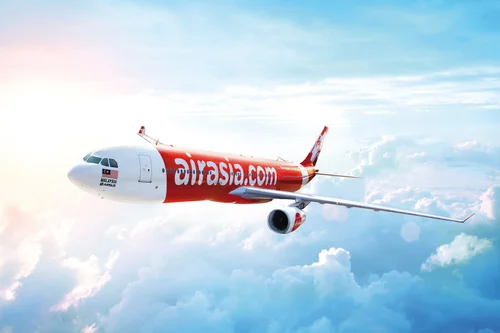
Tony Fernandes has called London AirAsia X's "most wanted route" since at least 2014. He first tried to conquer it in 2009. He failed in 2012. He tried again in 2023, and the economics weren't right. In February 2026, he announced the most audacious attempt yet--a Kuala Lumpur–Bahrain–London Gatwick daily service at introductory fares starting from RM199--roughly ₹3,700, or about $43-- making it the cheapest long-haul ticket to the UK from Southeast Asia by a margin that would make legacy airline CFOs wince.
Then the Iran war broke out. And AirAsia X's London dream was delayed again.
This is the story of aviation's most persistent budget gamble, and why this time, despite everything, it might actually work.
The 2012 Failure: Full Planes, Empty Wallets
The first chapter of this story ended in humiliation. AirAsia X launched London Stansted in 2009, switched to Gatwick in 2011, and shut the whole thing down in January 2012, taking Paris with it.
The brutal irony was that the flights weren't failing on demand. Load factors on the London and Paris routes were above 80%. People desperately wanted a cheap flight from Southeast Asia to Europe. They were buying the seats. The problem was that every seat was being filled at a price that didn't cover the cost of flying it.
Three structural poisons killed the route. First, AirAsia X was flying four-engine Airbus A340-300s — aircraft that were already a decade old, with fuel burn economics that belonged to another era of oil prices. Four engines burn roughly twice as much fuel as two. On a 13-hour sector, that difference is existential for a low-cost carrier. Second, UK Air Passenger Duty, one of the highest aviation taxes in the world was eating into every fare. Third, the European economy was in post-financial-crisis depression, and AirAsia X's price-sensitive passengers were among the first to cancel discretionary travel.
2026: A Different Aircraft, a Different Hub, the Same Ambition
AirAsia X's third attempt is structurally different in almost every way that mattered in 2012.
The A340-300 is gone. In its place is the Airbus A330-300, a 367-seat twin-engine widebody with fuel economics dramatically better than its predecessor. Two engines instead of four changes the entire cost structure of a 16-hour sector. It is not enough on its own long-haul LCC economics are still brutally thin but it is a necessary foundation.
The more radical innovation is the hub strategy. Rather than flying nonstop from Kuala Lumpur to London-a 13-14 hour sector that requires the maximum-range variant of an A330-AirAsia X is routing through Bahrain. This serves three purposes simultaneously. It makes the A330-300's range work without strain. It positions Bahrain International Airport, which is actively courting carriers displaced from Gulf airspace, as AirAsia X's first hub outside Asia. And it creates a natural stopover point that could, in future, be used to feed passengers from other markets including India, onto the London sector.
The Indian dimension is not theoretical. In 2012, AirAsia X also pulled out of Mumbai and Delhi, citing visa restrictions and punishing airport fee hikes. Today, with India being the world's fastest-growing aviation market and Bahrain positioning itself as an accessible Gulf gateway, the KUL–BAH–LGW triangle has an obvious Indian extension. If AirAsia X eventually adds Delhi or Mumbai to the Bahrain hub, Indian travellers gain a credible budget option to the UK, one that doesn't require paying full-service fares on Emirates, British Airways or Air India.