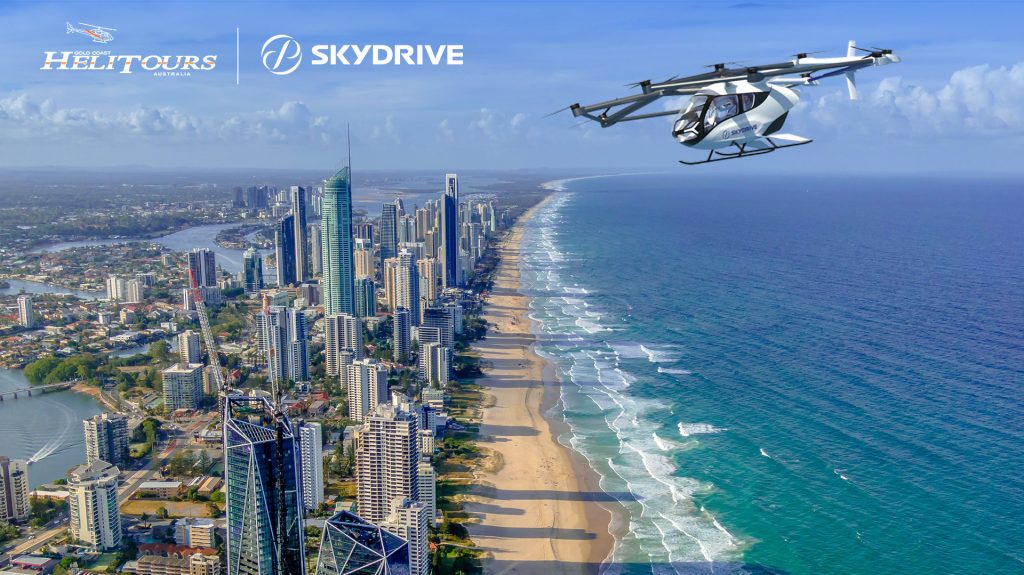
SkyDrive has signed a letter of intent with Gold Coast Helitours for up to five of its SD-05 eVTOL aircraft, with the first deliveries targeted for 2028 and commercial sightseeing operations planned from the operator’s existing heliport. The route under discussion is a short scenic circuit over the Broadwater and Surfers Paradise. The deal is small in fleet terms. Its business logic is larger. The earliest sustainable eVTOL customers may be tourism operators rather than daily urban commuters.
Helicopter tourism companies already solve many of the problems that still confront city air-taxi concepts. They know how to price a novel aerial experience, manage weather cancellations, maintain rotorcraft, train pilots for short visual flights, and sell tickets to passengers who are paying for the view rather than for the fastest possible trip to work. Their existing heliports often are in high-visibility locations and already have some of the operational permissions and community acceptance that a pure urban vertiport must still earn. Adding a quieter electric aircraft to that model is an incremental step, not a complete reinvention of the passenger journey.
Commuter air-taxi networks face a steeper set of requirements. They need dense networks of landing sites, predictable high utilisation, competitive door-to-door times against ground transport, public acceptance of frequent low-altitude flights, and fares low enough to attract regular users. Certification, infrastructure and energy supply must all mature together. Tourism flights can begin with lower frequency, higher yields and a clearer value proposition. a short, memorable experience rather than a routine substitute for a train or car.
The same pattern is relevant across Asia. Indian Himalayan and coastal helicopter tourism, Maldives resort transfers, Thai and Balinese scenic and island flights, and Nepal’s mountain aviation all operate in environments where passengers already accept aviation as part of the holiday product. Operators in those markets understand seasonal demand, weather limits and the willingness of visitors to pay a premium for access or spectacle. An eVTOL that is quieter and potentially cheaper to operate per hour than a conventional helicopter could fit those routes before it becomes a practical daily shuttle inside Mumbai, Bangkok or Jakarta.
Certification and local approvals will still determine the timeline. Yet the Gold Coast letter of intent points to a realistic sequencing like p[rove the aircraft in controlled, high-yield tourism settings that already have aviation infrastructure and customer willingness to pay, then expand toward denser urban networks once costs, reliability and public acceptance improve. The first commercial eVTOL stories may therefore be written over beaches and landmarks rather than over congested city freeways.