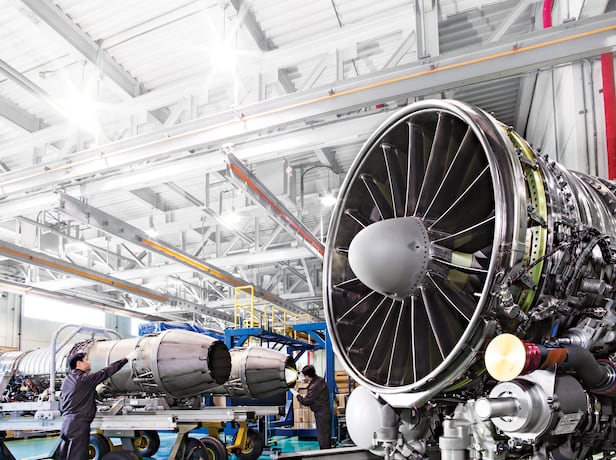
Seoul has unveiled an ambitious new aerospace strategy aimed at capturing 3% of the global aerospace market by 2035. The plan includes developing a domestically built electric-turbine hybrid VTOL aircraft with prototype flight tests targeted for 2030, localising production of advanced civil aircraft engines, and, most audaciously, positioning South Korea for a seat in the next major global joint commercial aircraft development programme by 2028.
The government is also creating an 'aerospace belt' linking key industrial cities (Changwon, Sacheon, Jinju, Suncheon, and Goheung) and establishing a new public-private aerospace innovation hub near the Korea AeroSpace Administration.
This is South Korea declaring its intention to evolve from a strong Tier-1 supplier and military aircraft partner into a credible independent aircraft manufacturing power on the scale of Embraer or Bombardier.
South Korea’s 'moonshot' aerospace ambitions focus on achieving technological sovereignty through an aggressive Advanced Air Mobility (AAM) rollout by 2028 and a $3.4 billion program to build indigenous aircraft engines by 2040.
It seems like a stategic hedge and a challenge because the timing and scope are significant. South Korea is seeking to reduce long-term dependence on the Boeing-Airbus duopoly while carving out space in a market increasingly contested by China’s COMAC. The hybrid-electric VTOL focus aligns with global urban air mobility trends, while the engine localisation push addresses one of the highest barriers to entry in commercial aviation. The 2028 goal of joining a major international programme suggests Seoul wants co-development influence rather than purely supplier status.
The Asian narrowbody and regional markets are currently dominated by the Boeing-Airbus duopoly and COMAC’s C919 as the emerging third option. But a credible Korean programme would introduce a fourth competitive pole. Even if South Korea does not immediately produce a full clean-sheet narrowbody success in hybrid VTOL and regional jets, or engine technology could reshape supply chains, technology transfer expectations, and pricing dynamics across the region.
What it means for Asia, India and Southeast Asia is a successful Korean player could offer new options for fleet diversification, technology partnerships, and potentially more competitive regional aircraft tailored to high-density, short-haul Asian operations. And to China COMAC now faces competition not only from the West but from a technologically sophisticated Asian neighbour with strong US alliances and manufacturing prowess. On the other hand, Boeing and Airbus raise the long-term risk of losing supplier share and influence in one of Asia’s most advanced industrial economies.
South Korea’s aerospace moonshot is still in its early phase, but the ambition is clear. By combining government vision, industrial policy, and private-sector execution, Seoul is betting it can move up the value chain in one of the world’s most capital-intensive and technologically demanding industries.
The next decade will test whether Korea can translate this strategy into flying hardware and meaningful global market share.